You have thought about it. You may have even added something to a cart and closed the tab. The gear was never the hard part — the sentence is. How do you tell someone you love that you want to try being tied up, or tying them up, without it landing wrong?
The fear underneath is rejection: that they'll be shocked, judge you, or quietly wonder what else they don't know about you. Here is the reassuring truth — surveys consistently show most adults have had similar fantasies and most have never voiced them either. Statistically, you are probably not confessing something to your partner. You are giving both of you permission.
Timing: Never in the Bedroom
The single most common mistake is raising it mid-intimacy or immediately after, when both people are at their most exposed. Choose a neutral, warm, low-stakes moment: a walk, cooking together, a long drive. Neutral ground makes it a conversation between partners, not a demand between lovers.
Three Openers That Work
You do not need a speech. You need one honest, low-pressure sentence:
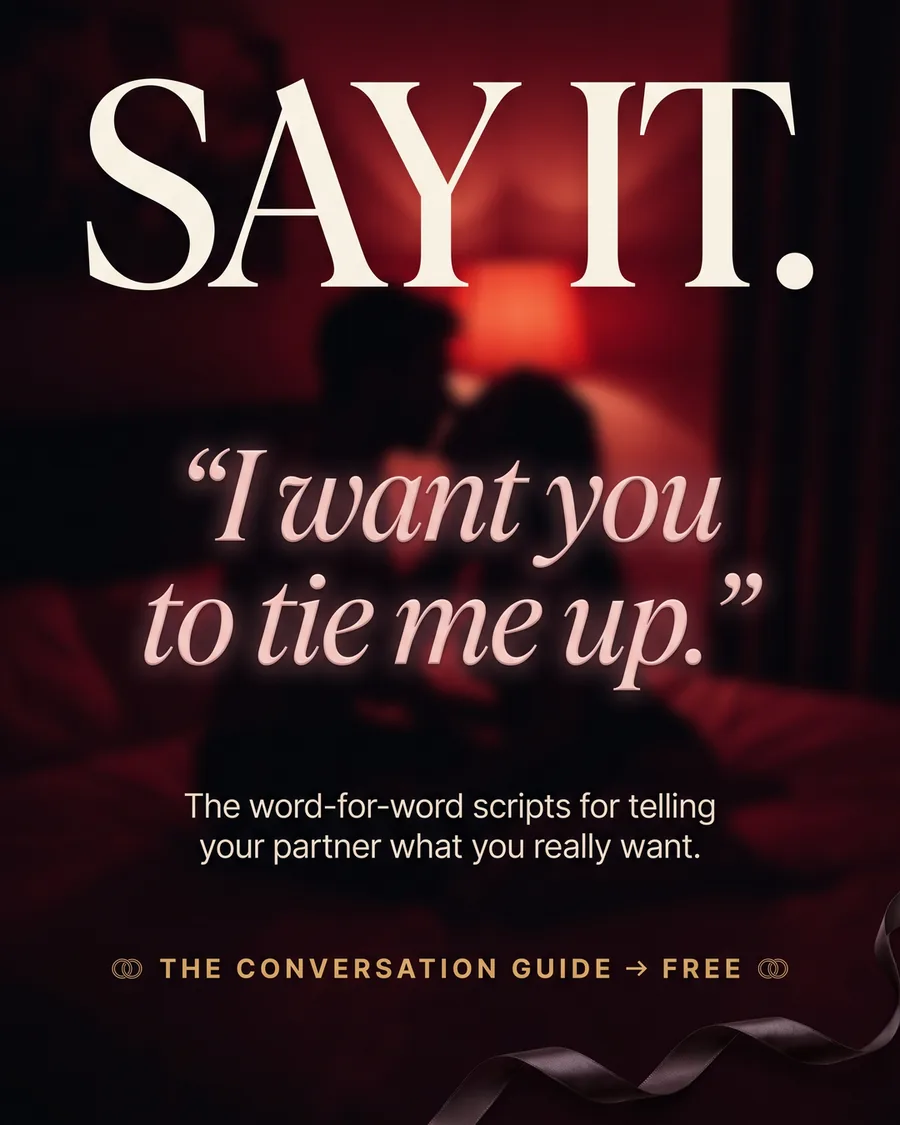
The curiosity frame: "I read an article about how couples build trust with light restraint play, and honestly it made me curious. Would you ever want to explore something like that together?"
The dream frame: "Can I tell you a fantasy I've had? No pressure at all — I just want to be able to share these things with you."
The menu frame: "Want to play a game where we each write three things we'd be curious to try, and compare lists?"
Each frames the idea as us exploring, not you performing for me. The phrase 'no pressure, I just wanted to share it' does more work than any other sentence in this article.
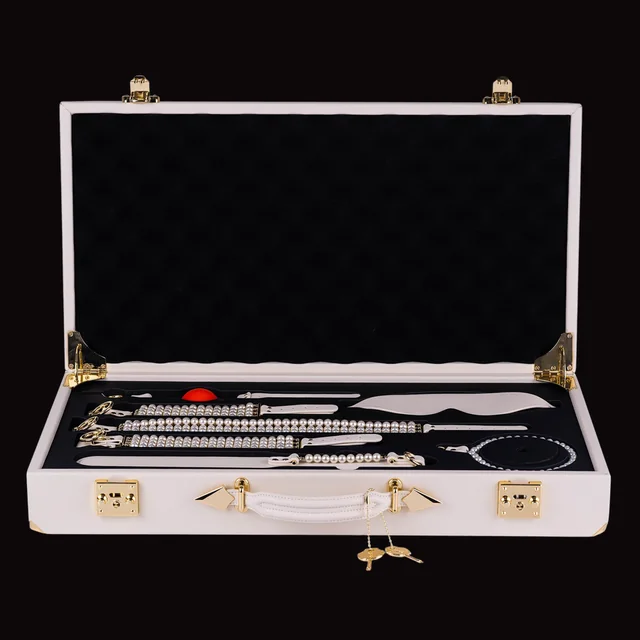
The Pearl Edition
Six pieces · Wrist and ankle cuffs, choker, blindfold, spanker, gag — pearl and gold, in a white case.
If They Hesitate
A pause is not a no. Most hesitation is about the unknown — images of extreme scenarios from film and pop culture. Respond with specificity and softness: "I'm not talking about anything intense. I mean something like a silk blindfold, or holding your wrists. Slow. And we stop the second either of us wants to." Then genuinely drop it and let them come back to it. Pressure kills curiosity; safety grows it.
Start With Sensation, Not Hardware
The best first night involves no buckles at all. Begin with sensory play: a blindfold, hands held gently above the head, a trailing silk ribbon. This teaches both partners the actual currency of restraint play — anticipation and trust — before any equipment enters the room.
When you do introduce a first piece, aesthetics matter enormously. A soft, beautiful object reads as romantic; industrial black hardware can read as intimidating. Start by showing your partner aesthetic, non-threatening designs — our own PEARL Edition was designed as exactly that kind of opener — soft pearl-and-silk detailing that reads like something from a jewellery boutique rather than a dungeon.
Agree on the Rules Before You Play
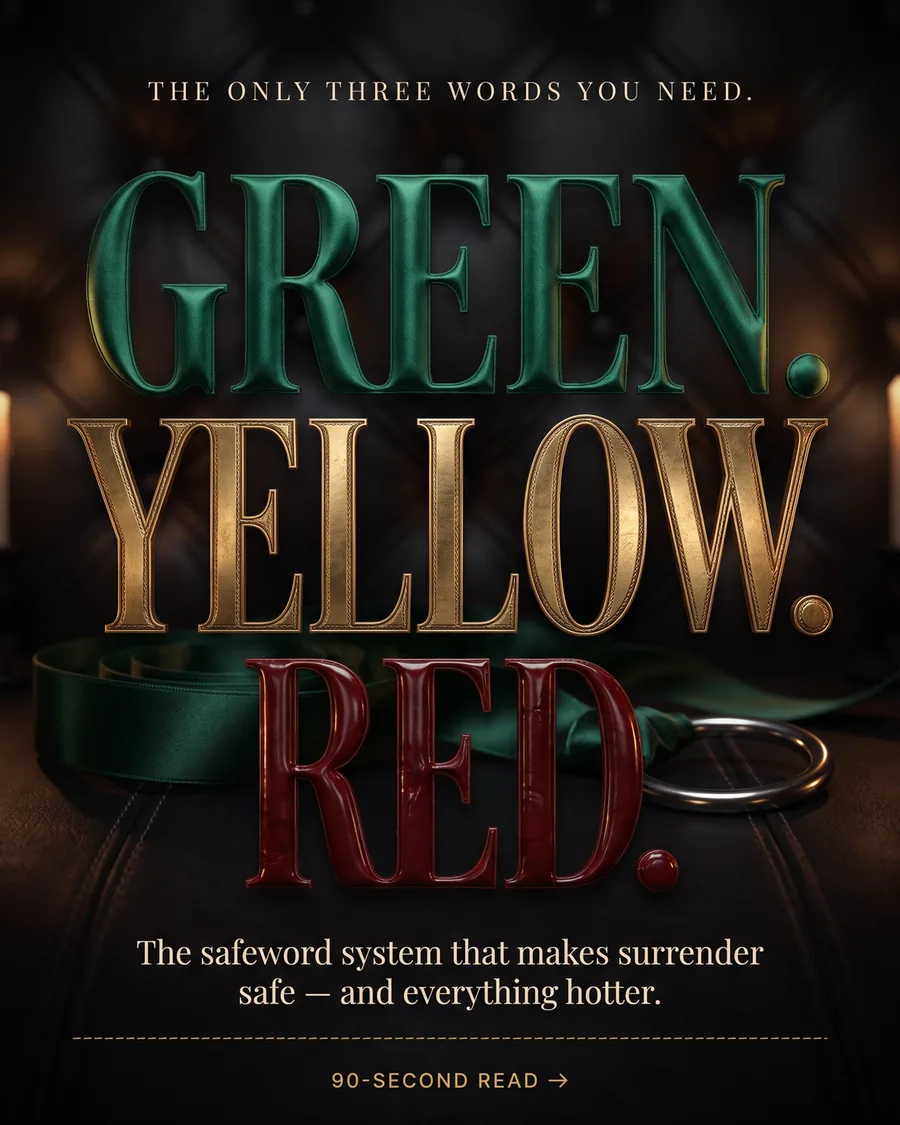
Three agreements turn nervousness into excitement: a safeword that stops everything instantly (the traffic-light system — green, yellow, red — is the easiest to remember), a check-in habit ('how does that feel?' is allowed and encouraged), and a shared understanding that either partner can end the scene at any moment with zero justification required. Paradoxically, the clearer the exit, the deeper both people relax.
Afterwards: Close the Loop
The conversation that happens after the first try matters as much as the one before it. Hold each other, and ask two questions: what did you like, and what would you change? This tells your partner that their experience steers everything — which is exactly what makes them say yes to next time.
One Last Reassurance
The couples who talk about desire are not the unusual ones — they are simply the ones who got past the first sentence. However it comes out, awkward counts. Awkward and honest beats smooth and silent, every single time.