Of all the barriers to restraint play, this one lives deepest: the fear of the feeling itself. Not injury, not judgment — the raw discomfort of being unable to act. For people whose lives are built on competence and control, voluntarily giving it up can sound less like pleasure and more like a panic attack with silk trim.
Here is the reframe that changes everything: in healthy restraint play, the bound partner never loses control. They delegate it — temporarily, conditionally, and with a guaranteed recall mechanism. Understanding that distinction, and building the structures that make it true, is the entire art of surrender.
The Paradox: The Bound Partner Holds the Power
Experienced practitioners state it plainly: the submissive partner runs the scene. They set the boundaries in advance, they define what is allowed, and their safeword ends everything instantly and unconditionally. The restraining partner operates entirely inside a framework the bound partner authored. What looks like helplessness is actually authorship — the wrists are bound; the terms are yours.
Control Structure 1: Negotiate Before, Not During
Anxiety thrives on the unknown, so eliminate it. Before anything is fastened, agree explicitly on: what will and won't happen, how long the scene lasts, what positions are comfortable, and what ends it. A scene with clear edges is a container, and containers feel safe. Many couples keep it as simple as: 'Wrists only, twenty minutes, you talk to me the whole time, and yellow means pause.'
Control Structure 2: Safewords That Actually Work While Bound
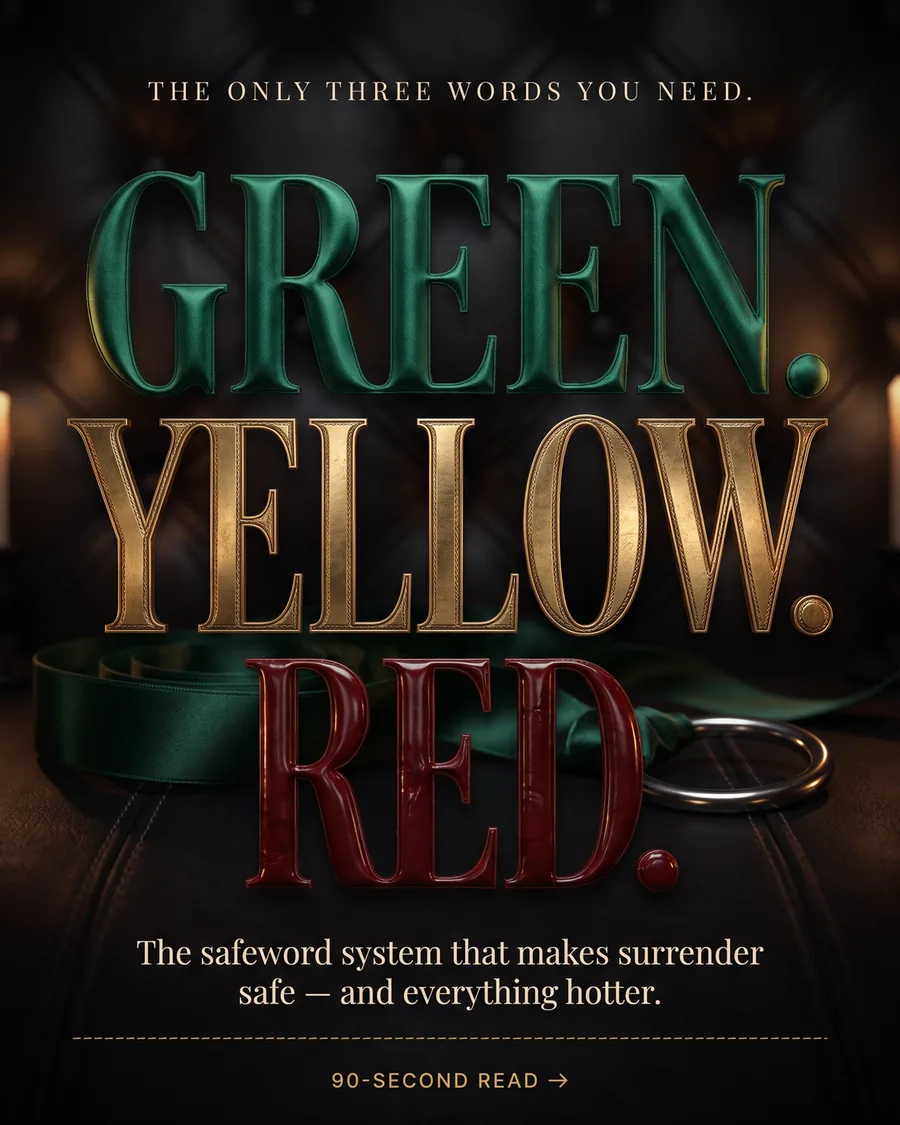
The traffic-light system remains the standard — green (more), yellow (pause, check in), red (stop everything now) — because it communicates gradations, not just emergencies. Add a non-verbal channel for any scenario where speaking is difficult: a triple tap on the mattress, dropping a held object, or three deliberate grunts. The free partner's job is to honor these instantly and without discussion. The first time a yellow is called and respected, something important happens: the nervous system learns the exit is real. That lesson is what unlocks depth.
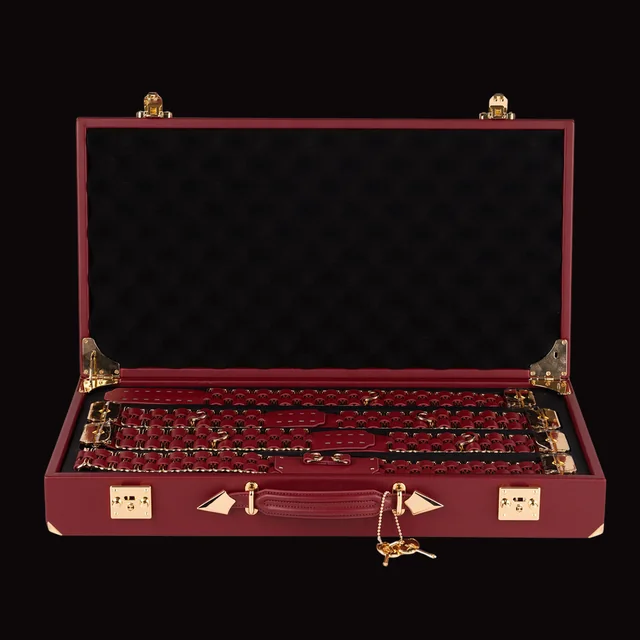
The Keen Bound Edition
Four pieces · Wrist and ankle restraints, neck control collar, torso restraint belt — adjustable throughout.
Control Structure 3: A Physical Exit You Can Feel
Psychological safety needs a physical foundation. Two rules make the body believe what the mind negotiated: never bound alone — the free partner stays present and attentive for the entire scene, no exceptions — and instant-release hardware, so that 'out' is always seconds away. This is where equipment becomes psychology: quick-release buckles — a signature feature across all SIN Premium sets — exist precisely so the bound partner's nervous system can verify, at any moment, that freedom is one motion away. Total trust in your equipment is what permits total surrender of your body.
Start at 10% and Earn Each Increment
Control anxiety responds beautifully to graduated exposure. Session one: hands held, not tied. Session two: one loose silk wrap the bound partner can slip out of at will. Session three: real cuffs, generous slack, five minutes. Each successful round teaches the deeper brain that surrender is survivable — then enjoyable — then, for many, the deepest relaxation they know. There is no timeline. The dial only moves when you move it.
If Panic Visits Anyway
Occasionally a wave of claustrophobic anxiety arrives even in a well-built scene. The protocol: call yellow or red immediately (this is the system working, not failing), release, breathe together slowly, and stay physically close. Afterwards, talk about what triggered it and adjust the container. One difficult moment handled with care typically increases trust — because the exit was tested and it held.
The Takeaway
Surrender is not the absence of control. It is control expressed as design: you write the rules, install the exits, choose the person, and then — only then — let go inside a structure you built. That isn't losing yourself. It may be one of the more sophisticated things a person in command of their life ever does with an evening.